

Salt, scientifically known as “sodium chloride,” is a food to pay attention to in your daily diet. Excessive consumption can increase blood pressure and promote water retention. The average daily amount recommended by nutritionists should never exceed 5 g, including that already present in food.
| Item | Value |
| Energy | 1299 KJ / 314 Kcal |
| Fat | 27 g |
|
of which: Saturated fatty acids |
19 g |
| Carbohydrates of which sugars |
0 g 0 g |
| Proteins | 18 g |
| Salt | 1.6 g |
| Calcium | 530 mg – 66% |
| Phosphorous | 280 mg – 40% |
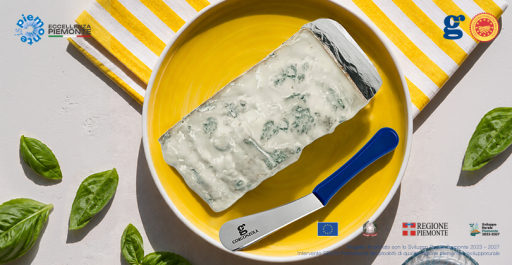
We often rely on our senses to assess the presence of salt, but this can be misleading. Gorgonzola, especially the spicy variety, may seem very salty, but it is important to remember that this is due to the presence of the mold typical of this delicious cheese. The salt content in Gorgonzola Pdo can vary, but on average it is around 1.6 g per 100 grams of product, according to the CREA nutritional table (Council for Agricultural Research and Analysis of Agrarian Economics).
Therefore, the unique taste and aroma of Gorgonzola are not attributable to its salt content, and also have the advantage of stimulating the senses, which in turn stimulate the secretion of bile and pancreatic juice, promoting the digestion of fats and proteins.
How is salt introduced into Gorgonzola? First of all, it is important to know that the production process for this Pdo cheese still involves a great deal of manual labor, and “salting” is one of the stages that is carried out strictly by hand. To make a wheel of Gorgonzola Pdo (approx. 12 kg), you need about 100 kg of whole pasteurized cow’s milk, to which lactic ferments, rennet, and penicillium spores are added. No salt is added at this initial stage. Once coagulation has taken place, the curd is left to rest to allow the whey to drain off. The wheels are then turned by hand and marked on both sides with the identification number of the dairy where they were produced, before being moved to cold rooms at a temperature of 18-24°C, where they are salted on the surface. After about 3 weeks of aging, the cheese is pierced with large metal needles, allowing air to enter the paste and develop the cultures already inoculated in the curd, thus giving rise to the unmistakable blue-green veins of Gorgonzola Pdo.
To learn more about the production method, watch the video filmed in the dairy: https://www.youtube.com/watch?v=V5QP_Yqajus&t=3s