




A total of 25,445 tons of Gorgonzola Pdo were exported in 2025, accounting for approximately 39% of annual production (Clal data). Comparison with the previous year shows a slight decrease of 2.14% in 2024.
Among the main causes of this decline, Antonio Auricchio, President of the Consortium for the Protection of Gorgonzola Pdo Cheese, cites several factors, including the climate of international uncertainty, the contraction in consumption across various markets, and increases in raw material and energy costs. “This decline does not alarm us, partly because it affects the entire sector, and it certainly does not indicate a decline in consumer preference for Gorgonzola cheese. However, a red flag has been raised, and if there are critical issues, they must be analyzed and understood.” According to Mr. Auricchio, therefore, the issue of declining competitiveness among producers is real, and stems from a climate of consumer mistrust, exacerbated by an unstable international situation marked by geopolitical tensions, rising protectionism, and international relations deteriorated by too many conflicts—leading to increased energy costs. “The blockade of the Strait of Hormuz,” Auricchio continues, “should not be underestimated because it will lead to a potentially uncontrollable rise in energy costs, including in terms of timing. There is a great deal of uncertainty, and this complicates the decisions of entrepreneurs—who are naturally inclined to plan for the long term—and causes anxiety among consumers, who are turning to safe-haven assets like gold.”
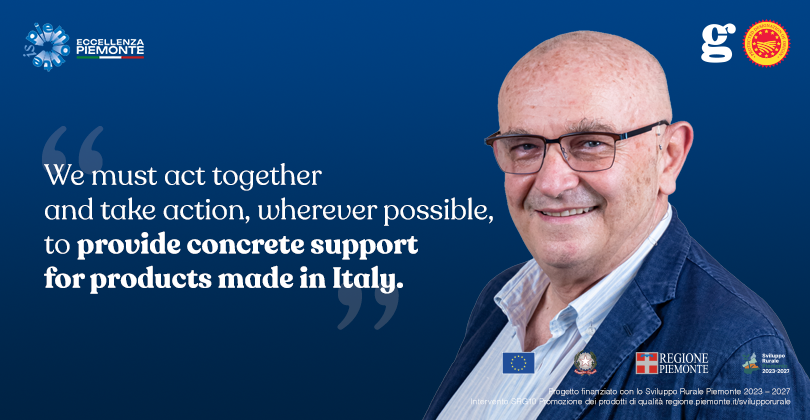
No cause for alarm, then, but some reflection is needed. “We must all act together,” concludes Auricchio, “farmers, producers, consortia, and the political class, to counter this climate of uncertainty and intervene, where possible, to provide concrete support for Made in Italy products.”
EXPORTS BY COUNTRY
Among the top three countries overall for volumes of Gorgonzola Pdo imported in 2025, France (511,494 wheels, +2.38%) is growing—accounting for about ¼ of global exports on its own—as is Spain (175,580 wheels, +3.17%), while exports to Germany (432,793 wheels, -6.9%), the second-largest foreign market, are plummeting. Gorgonzola exports are also declining to the important Dutch market (90,737 wheels, -16%) as well as to the main Eastern European countries: Poland (-1.9%), Romania (-15.7%), and Hungary (-7.61%), while the Latvian market (+153%) and the Danish market (+25%) recorded strong growth.
Within Europe, the United Kingdom saw a decline (38,314 wheels; -6.58%), while Luxembourg grew by 8.8%, becoming the fourth-largest market for Gorgonzola worldwide with 113,952 imported wheels.
In the rest of the world, exports to the U.S. declined (31,440 wheels; -2.62%), as the U.S. imposed tariffs on EU imports in the second half of 2025, while Canada’s performance was extremely positive (+113%). In the Far East, strong interest in Gorgonzola Pdo persists among the Japanese—the vast majority of whom are lactose intolerant—who imported 41,758 wheels in 2025, marking a 2.5% increase. Countries with triple-digit growth in 2025 included Peru, Kazakhstan, and Vietnam.
Once served at the table, the “King of Blue Cheeses” is best paired with wines that are somewhat smooth and savory, or with a beer—preferably a double malt. Belgian Trappist beers or passito wine are ideal for enhancing the unique, spicy, stronger, and more assertive flavor of Gorgonzola Pdo.